
What is Truly Analytics? 
Truly Analytics fixes the data you’re making decisions on by acting as a fully featured intermediary between your users and Google Analytics.
Right now, your Google Analytics data is wrong. Between 15% and 45% of your traffic1 is invisible because ad blockers stop tools like Google Analytics from firing at all.
That means:
- Missing users
- Missing conversions
- Broken attribution
- Bad decisions & undervalued assets
We implement analytics that does the full job providing you a complete, accurate view of your traffic, revenue and growth whilstguarding your users consent and protecting their privacy.
With Truly Analytics
You can continue using Google Analytics without exposing your users to Google's advertising machine.
Network Intelligence, First Party Attribution & Event Hooks 
As part of the managed version of Truly Analytics we include Network Intelligence giving you realtime data on the networks interacting with your content including:
- organisations targeted by your GTM and ADM teams
- organisations reading your content such as industry leaders, public sector networks and more
- AI labs and crawlers
With Network Intelligence you’re able to get this data directly to you in Google Analytics populated in real time.
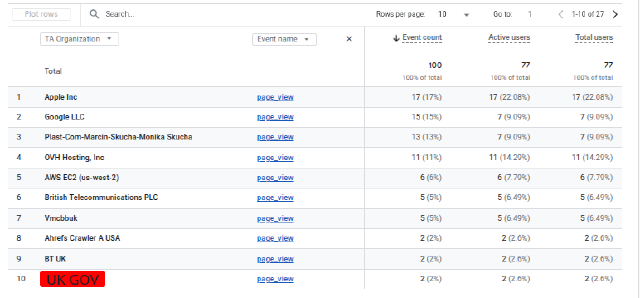
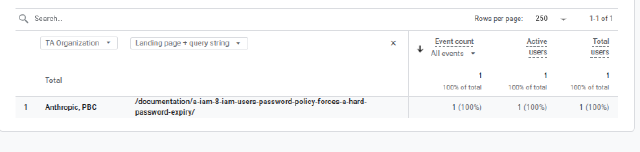
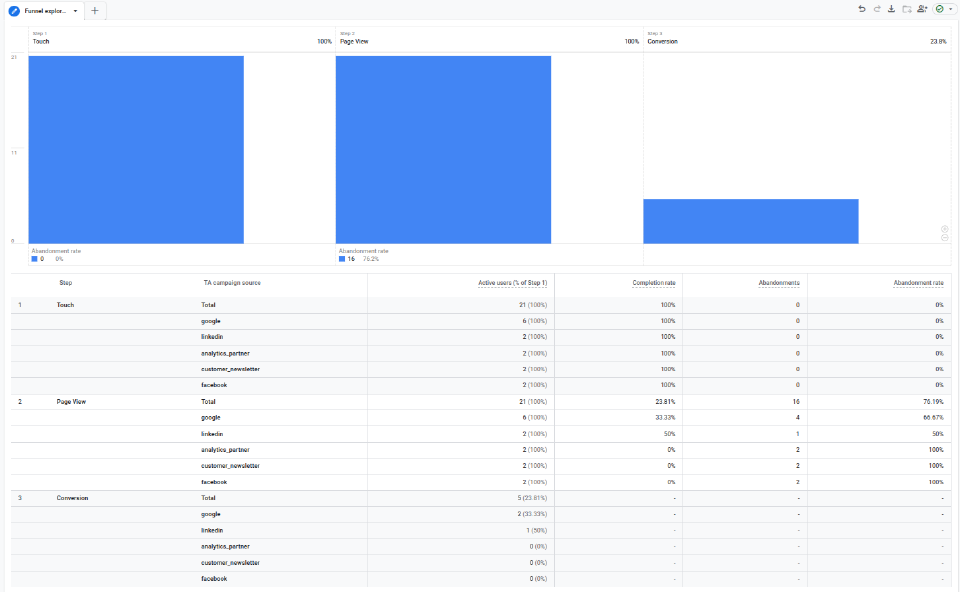
Managed Truly Analytics also includes First Party Attribution, giving you a direct record of the campaign data Truly Analytics actually receives and the session activity that follows it. This helps you compare campaign traffic, engagement and conversions without relying on the conflicting claims made by separate advertising, affiliate, influencer and email platforms.
First Party Attribution helps you see:
- the campaign source, medium and name that arrived with the visitor
- the pages, events and conversion actions that happened in that session
- raw first-party campaign records alongside Google Analytics reporting
- cleaner evidence for which campaigns produced direct observed results
Additionally with Event Hooks, Truly Analytics is able to forward activity and events directly downstream to your CRM and internal tooling letting you get realtime user activity directly into your CRM and revenue systems.
Who it’s for 
If you’re:
- Running SEO or paid traffic
- Scaling content sites
- Operating an ecom store
- Managing client campaigns
…then incomplete data is costing you money.
Ad blocker usage is now ~30%2 of global internet users and even higher in tech-savvy or high-income audiences. So if you’re targeting valuable users, you’re flying blind.
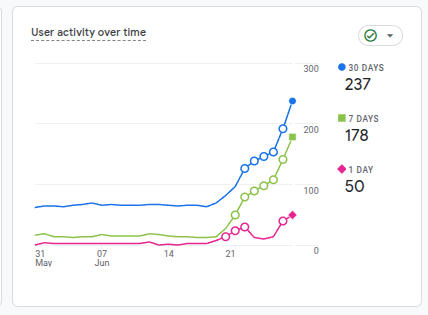
However, depending on your user base you can find your recovered traffic become a majority of your analytics. Our highest uplift so far is +1500%:
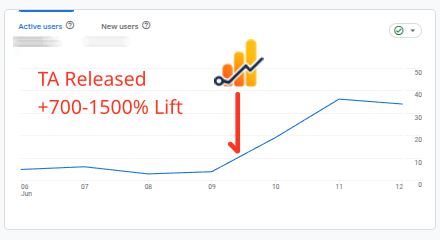
Installing Truly Analytics almost always provides an uplift in your revealed views, far in advance of what the market and your organisation expects. Below is the results from a small specialist cybersecurity firm whose ICP is actively coached to use adblockers. More than half their traffic was hidden:
Why it exists 
Because modern analytics are fundamentally broken - they don’t do the work to respect user privacy, legal obligations and the technology to serve business needs.
The industry hasn’t put in the effort required to meet these challenges, so they accept:
- ~10–20% of users are never tracked at all, or more depending on your IPC
- Entire segments of high-value users are systematically excluded
- The concept of consent is abandoned and analytics left by the wayside
- Attribution is always some stupid number that doesn’t make sense
We built Truly Analytics because we didn’t know what our most engaged users were interacting with and what they were interested in. We were caught in the ad blocking crossfire leaving us blind to how we can better serve our audience.
Worse still, our dashboards looked clean, but we knew that they were incomplete automatically devaluing our assets. We knew we had an audience but they were invisible to us and we couldn’t prove that, until we built Truly Analytics.
We built Truly Analytics to close that gap without hacks, spammy workarounds or violating privacy.
How it works 
Truly Analytics sits inbetween your users and Google Analytics. We stop Google getting direct access to your users whilst protecting their consent and privacy. This also lets us build in the features that Google won’t build in as it doesn’t serve their PPC model.
As a result:
- More accurate traffic numbers
- Real conversion data
- Reliable attribution
- Better decisions
Integration is as simple as setting up your account and installing your provided script. And to prove it you can start your free three day trial where:
- You get three free days of Truly Analytics usage
- No card details or payment required
- No obligation to continue
- Runs alongside your current Google Analytics setup without interference
Start your free trial
No obligation, free 3-day trial that runs alongside your current Google Analytics setup
References & Documentation 
Privacy PolicyTerms
Cookie Policy