Google Analytics is free for a simple reason stated clearly by Google themselves: Google Analytics makes Google’s advertising ecosystem work better.
Originally the software that became Google analytics wasn’t free and commanded a price premium starting at almost $1,000 USD p/m today. However the company that made it was acquired by Google and positioned in the advertising business as a method to validate and support Google’s advertising services.
Let’s quickly cover the background so we understand what Google Analytics’ origin is, why it’s free and how that affects the overall advertising system.
From Urchin to Google Analytics 
Google Analytics did not begin as a native Google product. It began as Urchin, a San Diego web analytics company founded before the modern analytics market had fully matured. Google announced the acquisition of Urchin Software Corporation on March 28, 2005, describing it as a web analytics company; the deal terms were not disclosed.
Urchin’s technology became “Urchin from Google,” then Google Analytics. One of Urchin’s founders later summarized the path directly: Urchin was acquired by Google in April 2005, became “Urchin from Google,” and later became Google Analytics.
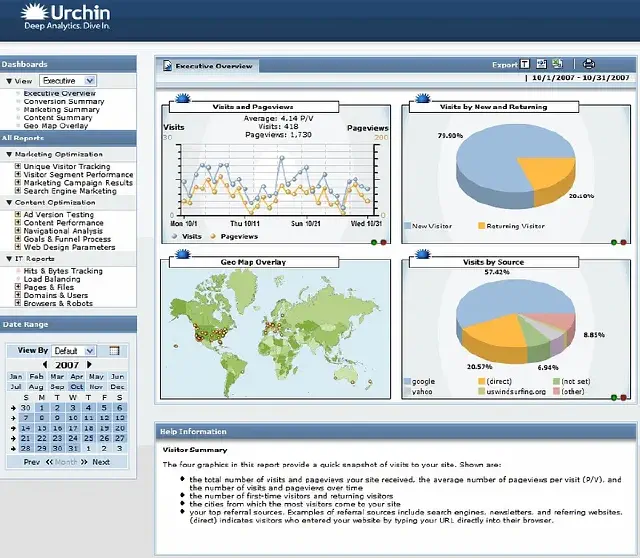
The original Urchin product was not free. Contemporary reporting said Urchin’s hosted web analytics service cost $495 per month before Google acquired it. After the acquisition, Google cut the hosted service to $199 per month, a roughly 60% price reduction. AdWeek reported the changes in May 2005: Urchin’s service had sold for about $499 per month, Google reduced it to $199, and then made it free.
That price history matters. Google did not invent a free analytics category from scratch. It acquired a paid analytics product, cut the price sharply, then removed the price barrier entirely to support its advertising operations.
That does not mean that analytics services as a whole lost their value - knowing your analytics had and still has enormous value for understanding your audience, proving your activity and determining your strategy. But the value to Google has never really been from selling analytics software licences. The deeper commercial logic is that analytics helps businesses measure marketing performance, attribute conversions, understand campaign outcomes and then spend more confidently across Google Ads and the wider Google Marketing Platform. To Google, analytics is a tool to support and validate it’s advertising business not to validate and support its clients traffic.
Google says this plainly in its own positioning: Google Analytics gives businesses tools “free of charge” to understand the customer journey and improve marketing ROI. The product is free because better measurement supports better advertising decisions - and advertising is where Google makes the real money.
We want to give all online marketers and publishers access to powerful web analytics to help them better understand what their customers want. With this knowledge, businesses can create more accurate advertising and build better websites
How Urchin & Early Google Analytics Worked 
Urchin was originally much closer to classic web analytics infrastructure than today’s GA4 interface. It could run as downloadable software on a local Unix or Windows server, processing web server log files and producing web analytics reports. Brian Clifton, former Head of Web Analytics for Google Europe, described Urchin as software that ran locally and processed server logfiles, including hybrid logfiles, with data stored locally in a MySQL database.
That older model mattered because early web analytics was often built around server logs: every page request, file request, referrer, status code and user agent left traces in the server’s own records. Urchin turned those logs into reports: visits, page views, referrers, campaign performance, geography, errors, bandwidth and other operational or marketing signals.
This worked reasonably well back in the early 2000’s as traffic on the web was usually of human orgin. Recording traffic at a server level still captured traffic from bots and software, but back then those bots, scrapers and other tools were obvious and a far smaller percentage of traffic than they are now.
Additionally, if Urchin were to go from the $500 p/m analytics software to the infinitely scalable $0 p/m Google Analytics, Urchin’s distribution status would need to change. Back in the early 2000’s streaming server logs to external services wasn’t common, hence Urchin would be installed directly on client servers with some measure of support and consultancy involved. That process would not scale, hence the server log analysis would need to change.
The replacement model, Urchin on Demand, moved Urchin from local installation on client servers into a service model without server installation. When Google Analytics launched publicly, this was the implementation pattern that they used: sign up, place a JavaScript tracking snippet on the pages to be measured and the user’s browsers would talk to Urchin on Demand directly skipping reading the server logs entirely. Urchin’s customers could then log into Urchin on Demand and view the analytics reports online.
That shift - from expensive analytics software to a free hosted tool with a lightweight tag - radically reduced adoption friction and allowed for scaling to a free tool.
A Free Launch is Never Charity 
On November 14, 2005, Google announced that Google Analytics was free for both existing Urchin from Google customers and new users. On the same day, Google’s official blog said the former Urchin service had been integrated with AdWords, made easier to use, and made free.
In addition to being free, Google Analytics includes: Integration with Google AdWords, and works with any online ad network…
That integration with AdWords is the key motivation behind forfeiting a genuine analytics product service. Google Analytics made website performance measurable in terms of advertising. This helped advertisers answer questions like:
- Which keywords attract valuable visitors?
- Which campaigns produce leads or sales?
- Which landing pages convert?
- Which channels assist conversion?
- Which advertising spend should be increased, paused, or reallocated?
Google’s 2005 press announcement framed Analytics as a tool to help businesses improve online marketing campaigns and websites, including determining which keywords, email campaigns and pages produced better outcomes.
In other words, Google Analytics helped close the loop between ad click → website visit → user action → conversion → campaign optimization.
That loop is central to why the tool was free - the analytics value was eaten by advertising business
The Killer Blow: Attribution 
Google Analytics has many features: page views, users, sessions, events, ecommerce, audiences, funnels, explorations, debugging and reporting. But commercially, the reason for it’s existence stems from identifying attribution.
Attribution is the assignment of credit for user actions to different ads, clicks and marketing impressions along the user’s path to customer. Attribution analytics is the measurement logic that connects advertising to conversion.
GA4’s event model underlines that connection. Events measure a specific interaction or occurrence on a website or app, such as a page view, link click, purchase or served impression. Events can be key events and key events can be tracked directly from Google Ads conversions.
That means events are not just behavioral analytics data: they are also the raw material for campaign measurement, conversion reporting, bidding optimization, remarketing, attribution and a reason to continue advertising.
This is why GA4’s event-based model fits Google’s advertising infrastructure so neatly. A purchase, form submission, signup, checkout start, add-to-cart action, file download, page view, or lead-generation event can all become measurable advertising outcomes. Even if advertised users don’t lead to conversion the blame is not on the advert, the advert has proven its job by bringing in users who, through Google Analytics, are proven to engaged.
Google Ads data appears in Analytics reports and Analytics data becomes available for use in Google Ads. Google lists Google Ads conversions based on Analytics key events and remarketing audiences as next steps after linking.
Google Analytics feeds advertising; advertising funds Google Analytics.
It’s Analytics, But It’s Really Advertising Analytics 
It would be wrong to say Google Analytics only exists for advertising. Businesses use it for product analytics, UX research, content performance, ecommerce reporting, technical debugging and audience understanding. But the feature architecture still supports an advertising-friendly measurement model.
However, in making the product free at point of view Google Analytics crowded out the analytics market. Before Google Analytics, serious web analytics was often a paid software or hosted-service market. Urchin itself cost roughly $495 per month before Google acquired it, and Google first cut the price to $199 per month before making it free.
The impact to the analytics market was immediate because Google changed the pricing anchor. A product that had recently cost hundreds of dollars per month became free.
Brian Clifton described the free launch as a “tipping point” and said Google “re-wrote the entire industry business model” by giving away a deep web analytics tool while other vendors charged based on traffic volume.
The impact of that decision was dramatic. An industry that once counted its customers in the tens of thousands, now exploded. In fact so dramatic was the uptake of the service that it had to close to new subscribers for 10 months while new machines were allocated to the number crunching tasks at Google’s data centres. However, once re-opened, the user base of Google Analytics rapidly expanded and went beyond a million in a matter of months.
By reducing the cost to zero, Google reset the expected price for analytics software to zero, whilst also setting the idea that analytics software is purely advertising related and therefore should be zero.
This created a crowding-out effect, especially in the lower and mid-market. If a small business, publisher, ecommerce store or agency could get strong analytics for free, it became much harder for paid vendors to justify basic web analytics pricing. Paid tools still survived, but they increasingly had to justify themselves through enterprise features, privacy controls, data ownership, advanced analysis, support, service-level agreements or specialization.
Google later launched Google Analytics Premium, reportedly priced at $150,000 per year, but even that was positioned against more expensive enterprise tools. WIRED reported that analysts saw Premium as less expensive than major paid competitors such as Adobe Omniture, IBM Coremetrics, and WebTrends, while Adobe’s Aseem Chandra characterized Analytics as a loss leader to capture ad spend.
This crowding-out effect is visible in market share.
W3Techs reports that Google Analytics is used by 82.8% of websites whose traffic analysis tool is known, equal to 47.7% of all websites in its July 2026 data. BuiltWith reports over 33.7 million live websites using Google Analytics and identifies it as the most popular analytics and tracking technology across the entire internet and top-site segments. Google Analytics is not just popular; it is the default analytics layer for much of the web.
The pattern was already clear years earlier. In 2011, Cardinal Path looked at Top 500 Retail sites and Fortune 500 companies and found Google was the premier web analytics solution, surpassing all other vendors combined in both groups. It also noted that many companies used GA alongside a paid enterprise solution, a pattern it called “double dipping.”
Google Analytics won not only because it was free, but because it was free and good enough for a huge share of the market.
Will It Stay Free? 
Google can give Analytics away because the product supports higher-value revenue streams.
The economic logic looks like this:
-
Free analytics increases adoption. Removing the price barrier gets Google’s measurement tag onto millions of sites.
-
More adoption makes Google’s advertising products easier to justify. Advertisers can see campaigns, channels, keywords and landing pages connected to business outcomes.
-
Better measurement increases advertiser confidence. When businesses can attribute revenue or leads to campaigns, they are more likely to keep spending.
-
Conversion data improves optimization. Google Ads can use conversion signals from Analytics key events for reporting and bidding workflows.
-
The analytics ecosystem reinforces Google’s platform. Google Tag Manager, Google Ads, GA4, Firebase, BigQuery exports, audiences, remarketing and attribution reports all make Google’s advertising and measurement stack harder to replace.
Google Analytics is free because measurement reduces friction in advertising, and advertising is Google’s core commercial engine.
For website owners, the free price is attractive. The trade-off is dependence and using an advertising analytics tool as an analytics tool.
The Future of Today 
Google Analytics is still dominant and will remain so but that dominance is stemming from a few additional unintentional wins. This includes the following:
- As the most used analytics software vendor, Google Analytics is referenced as an independent vendor for website traffic validation when valuing digital assets such as websites. Page views contribute valuation to a digital asset so independent verification shared via Google Analytics provides metrics for independent asset verification
- As a collaboration platform - Google Analytics has reporting built in so it’s common for SEO, PPC and other vendors to access Google Analytics properties for their clients to create and host their reports
None of these have to do with advertising but they help mainstay Google Analytics as the de facto standard. Requirements like this underline why Google Analytics is found on sites even when running other analytics tooling.
Whilst Google Analytics meets non-advertising needs, the original Pay Per Click world it served is declining from its peak.
GTM and marketing businesses are choosing to opt for better outreach methods. This can include influencer marketing, thought leadership, highly targeted SEO and others. The rates in Pay Per Click advertising such as Google’s own advertising services are turning marketers to different methods with the result being a need for analytics without being part of a PPC marketing platform like Google’s.
Rising CPCs, shrinking impressions and poor lead quality mean 22% are getting rid of their underperforming paid digital ads. That’s why they’re niching down to try podcasts, ABM ads, and targeting key newsletters their ICP reads
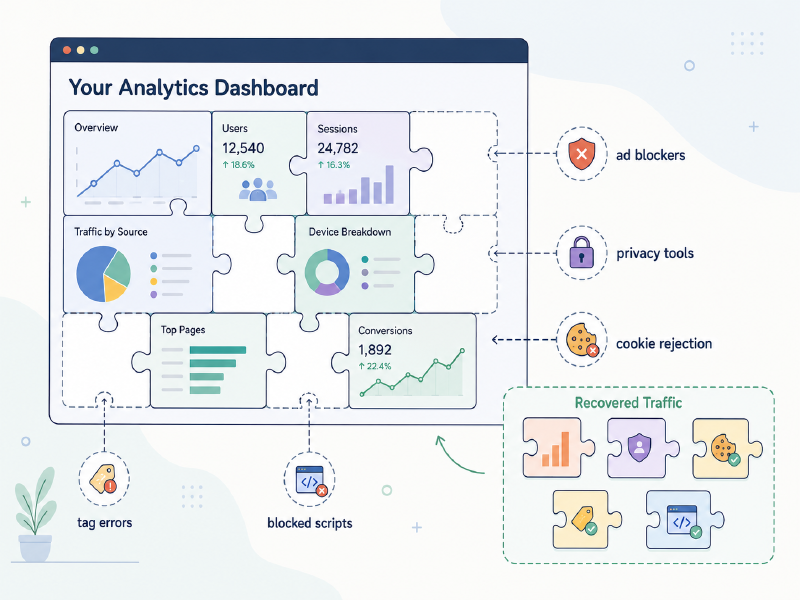
There’s two parts to this decline in Return on Ad Spend, the first is the cost of advertising and the second, less well admitted or discussed, is the reduction in available inventory leaving more stagnant marketers competing for less inventory. This loss of inventory is coming from ad-blocking, migrations to AI search and whole of household restrictions on inbound marketing channels including network-level blocking, heavy regulation and platform controls.
In talking to my friends in the industry, a seven to tenfold ROAS seemed to be the norm, now we are lucky if it’s a fourfold.
As Google Analytics supports Google’s advertising business users who block advertising also block Google Analytics by default - it’s all the same advertising platform. Google could fix this by spinning out Google Analytics into its own analytics software disassociated from the advertising feature-set but in the decades of ad-blocking and de-Googlisation, they haven’t, Google Analytics is part of their advertising platform so whilst users who block ads might be valuable for analytics purposes they’re worthless for advertising.
Supporting this, there’s analytics software features that don’t Google has never built for Google Analytics that are crucial for supporting audience quantification, direct marketing campaigns and ties to revenue funnels outside of Google’s advertising platform. We know as we had to build them, and if we can build them Google certainly can.
Truly Analytics has Network Intelligence used for identifying the origin of users based on the internet networks they contact you from. This lets you build real audience metrics even down to the organisation level covering government, business, bots, data centers and residential networks. As an advertising platform Google aims to target the individual leaving audience at the wayside. When working outside of Google’s advertising platform chasing the individual may not be the appropriate approach, for example, B2B sales teams targeting organisations via Account Based Marketing. They want to know how many whitepaper_download events they’ve had from networks owned by major consultancies, banks or government organisations not targeting executives at home for potentially blocked ad space.
As a tool, Google Analytics doesn’t integrate outside of the Google platform. There’s no ability to send realtime hooks to your supporting services such as your CRM or other tooling. Your data stays in the Google platform and all the connections are built into Google’s platform. For a free product this is understandable, for building a Go To Market strategy outside of paid ads this isn’t workable.
As time continues and the current heyday of Pay Per Click advertising gives way to influencer partnerships, sponsorships, user generated content and founder led marketing, Google Analytics starts to be more obviously an advertising analytics tool and not an analytics tool intended for it’s audience.
We’ve looked to fill that gap with Truly Analytics, providing the missing features that Google Analytics needs to become a modern analytics tool without sacrificing its critical role in M&A and wider online industries due to its ubiquity. Find out more about how Truly Analytics fixes Google Analytics here
Find out more about Truly Analytics
Recover missing traffic, improve visibility and connect content activity to real performance data.